
How to Balance Strategy and Execution in Your Business
Most business owners are stuck in one of two places. Either they’re full of vision, but nothing’s actually moving, or they’re completely flat out, every single day, yet the business looks the same as it did six months ago.
The best business leaders know when to zoom out and lead strategically, and when to roll up their sleeves and execute. Getting that balance right is what separates owners who grow from owners who grind.
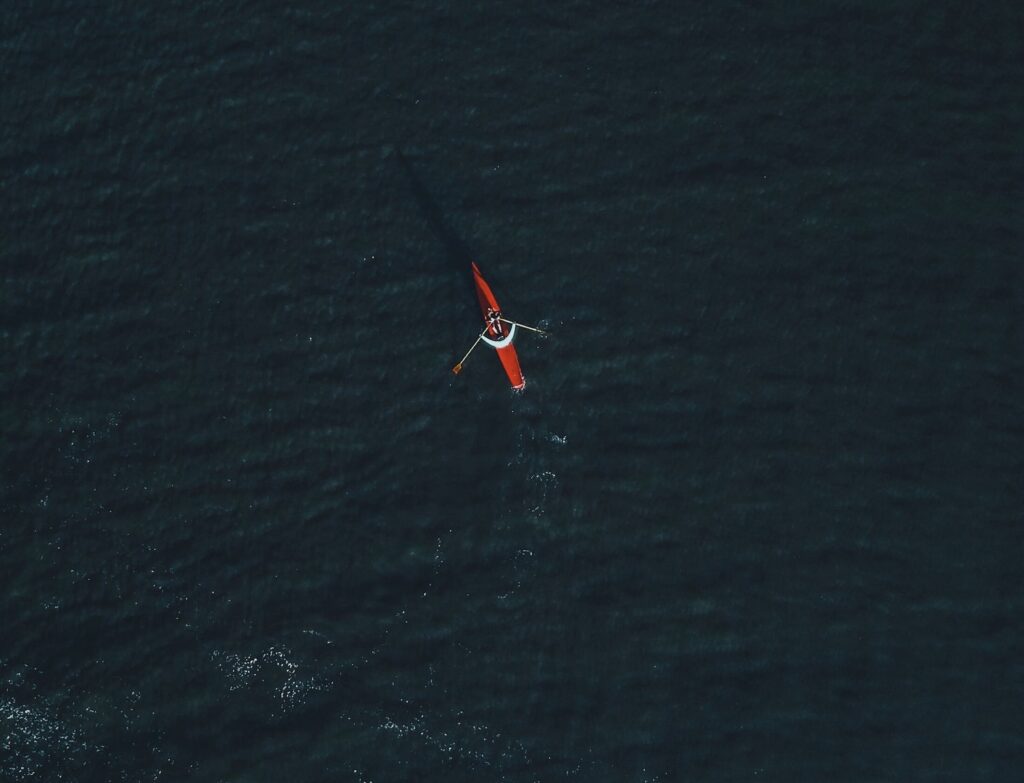
At Business Activators, this is one of the most common patterns we see in the messy middle, that stage where an Australian business has passed the startup chaos but hasn’t yet built the systems to scale beyond the owner. A useful framework for thinking about it is the distinction between a helicopter view and a rowing view.
This article breaks down what each view looks like and why getting stuck in one or the other is costly. What’s important is to build the rhythm between both, so your business can grow without wearing you out.
The View From the Top Changes Everything
Flying the helicopter means getting above the noise long enough to see clearly. From up there, you spot the roadblocks your team is too close to notice, the market shifts happening while everyone’s heads are down, and the opportunities busyness keeps hiding. It gives you perspective.
When you’re in helicopter view, you’re asking where the business is going, and you are evaluating risks before they become crises, and staying ahead of what your competitors haven’t seen yet.
Helicopter view activities include reviewing your three-year strategic plan and checking you’re still on track, identifying new revenue streams or partnerships, and reading financial trends for what they’re actually signalling.
Research published in MIT Sloan Management Review found that leadership teams that don’t deliberately examine their strategic priorities consistently overweigh day-to-day operations at the expense of where the business is actually heading. Scheduled strategic thinking isn’t a luxury. It’s a discipline. Block at least two hours a week, protect it like a board meeting, and don’t let operations creep in.
The Engine Room of Your Business
Without someone keeping things moving, even the best strategy stalls. Execution isn’t glamorous, but it’s what turns plans into results. The leaders who can roll up their sleeves when it counts are the ones their teams trust most.
When you’re rowing the boat, you’re managing people, solving real-time problems, tracking cash flow, and keeping the day-to-day machine running. Rowing view activities include managing staff performance and daily workflows, responding to customer issues or urgent operational problems, and monitoring weekly financials and sales activity.
Rowing often dominates a business owner’s schedule, especially in smaller businesses. When you’re always in execution mode, you never lift your head long enough to notice the cliff ahead.
Harvard Business Review has noted that one of the most difficult transitions for leaders to make is the shift from doing to leading, and that the longer a leader holds on to tasks they could hand over, the more their own capacity becomes the ceiling of the business. Gallup research puts a number on it: business owners who delegate effectively generate 33% more revenue than those who don’t. You become the system instead of building the system.
The irony is that rowing feels productive. There’s a fire, you put it out, you move on. It feels like progress. But if the same fires keep breaking out in the same places, that’s not execution. That’s a systems problem disguised as a workload problem.
The Real Cost of Getting Stuck in One View
Most business owners don’t choose to get stuck. They drift into one mode because circumstances pull them there, or it’s where they feel the most comfortable, and then the weeks turn into months and the months into years.
Stuck in the helicopter? Your business drifts. Big visions don’t build themselves. Always planning and never executing means your team loses direction, morale drops, and the gap between what you say the business is doing and what it’s actually doing quietly widens. Strategy without action is just an expensive reflection.
Stuck in the boat? Your business plateaus. This is where most Australian SMEs in the $500K to $10M range end up: busy and exhausted, but not growing. Revenue flatlines, and the owner becomes the bottleneck for every decision. Strategic thinking never happens because operations never stop. Every hire, every client issue, every process question flows through the same desk. The business can’t move faster than its owner, and the owner is already at capacity.
McKinsey research found that even high-performing companies have a 30 per cent gap between their strategy’s full potential and what is actually delivered, driven largely by operating models that fail to connect strategic thinking to day-to-day execution. The two modes need to coexist, but they can’t occupy the same time slot.
Helicopter vs Rowing in Business at a Glance
|
Helicopter (Strategic) |
Rowing (Operational) |
|
| Focus | Direction, vision, growth | Execution, process, stability |
| Time horizon | 12 months to 5 years | Today, this week, this month |
| Key question | Are we building the right thing? | Are we building it right? |
| Risk if overused | Disconnection from reality | Burnout, missed opportunities |
| Tools | Strategic plans, market data, KPIs | Dashboards, SOPs, team check-ins |
Most owners already know which column they live in. The goal is to schedule both intentionally.
A Business That Changed Its Altitude
A retail owner came to Business Activators, spending years managing stock, scheduling staff, and handling customer complaints herself. Every operational issue flowed through her desk. She wasn’t failing at execution. She was drowning in it.
With guidance from our team, she built a three-year strategic roadmap, delegated operational responsibilities clearly, and introduced simple KPI dashboards so the team could self-manage day-to-day decisions. Within 12 months, revenue had increased by 28%, and she finally had the time and headspace to focus on growth.
The work didn’t decrease. The altitude changed.
How to Build a Rhythm Between Both
1. Lock In Weekly Helicopter Time
One two-hour block per week, non-negotiable. Use it to review your growth goals and think about what needs to change. No operational tasks allowed. Treat it like a board meeting with yourself. If you cancel it repeatedly, the strategy never happens, and six months from now, you’ll be in the same place, wondering why nothing has moved.
Some owners find it useful to change their physical environment for this time, a different location, no email, phone on silent. The point is to signal to your brain that this is a different kind of thinking, not more of the same.
2. Delegate the Rowing
Document your repeatable processes and hand them to your team. You can’t lead from the helicopter if you’re the only rower. This is where operational systems and accountability frameworks become powerful tools. Many owners at this stage implement these with support from a business adviser or coach, because the process of documenting and handing over work surfaces exactly where the bottlenecks are.
If a task can’t be done without you, it isn’t a process. It’s tribal knowledge. And tribal knowledge is a growth ceiling.
3. Use KPIs as Your Altitude Gauge
Key performance indicators give you visibility without pulling you back into daily operations. The goal is to track the right metrics from the helicopter so you only need to land when something genuinely requires your attention, not every time a small problem surfaces.
Track five to seven core metrics: revenue growth, sales pipeline value, customer retention, team capacity, and profit margins. Review them weekly from the helicopter. Intervene only when something signals a real problem. A strong foundation in business planning makes this easier to implement consistently, because your KPIs connect directly to your strategic priorities rather than just measuring activity.
The owners who do this well stop being surprised by problems. They see them coming three weeks out and have time to respond rather than react.
4. Build a weekly operational rhythm for the team
If you’re going to spend less time in the boat, your team needs a structure that keeps things moving without you. That means regular check-ins, clear ownership of decisions, and a simple escalation framework so people know what they can handle themselves and what actually needs to come to you.
A weekly team meeting with a standing agenda, a shared dashboard, and clear KPI ownership goes a long way. Many of the businesses we work with use a simple Monday check-in format: what’s on track, what’s at risk, and what needs a decision. It takes thirty minutes and eliminates most of the ad hoc interruptions that pull the owner back into rowing mode throughout the week.
5. Know When to Land
Sometimes the business pulls you into operations. A cash flow crunch, a key client issue, a team crisis. That’s fine. The skill is landing, solving it, and taking off again. The mistake is never leaving. Strong leaders solve the issue, stabilise the system, then return to strategy. Understanding your business balance sheet is part of knowing when a crisis genuinely requires your direct attention and when it can be handled at the team level with the right information.
The question to ask yourself is: am I here because only I can solve this, or because no one else has been given the authority or information to solve it yet? If it’s the latter, that’s the real problem to fix.
Frequently Asked Questions
What does “helicopter view” mean in business?
The helicopter view means stepping back from daily operations to assess your strategy, market position, and long-term goals. It’s the perspective that prevents reactive decision-making and keeps growth on track. Without it, owners end up solving the same problems on repeat instead of removing the cause.
How do I know if I’m spending too much time in operations?
If growth has stalled, you’re the bottleneck for every decision, or you rarely plan beyond next week, you’re over-indexed on rowing. Ask yourself whether your business could run normally for one week without you. If the honest answer is no, that’s where to start.
Can a small business owner realistically Balance Strategy and Execution?
Yes, but not simultaneously. Successful owners schedule dedicated strategic time while delegating routine operational work. This intentional switching between roles allows the business to grow while maintaining stability. It’s less about finding more hours and more about protecting the ones you already have.
How does business coaching help with this balance?
A good adviser sees both modes from the outside. They help identify where you’re stuck, build systems that hold accountability without requiring your constant presence, and develop your team so you can lead at altitude without the business drifting. This is a core part of how Business Activators supports established Australian businesses.
What’s the biggest mistake owners make when trying to delegate?
Handing over tasks without handing over context. Delegation fails when the owner transfers the activity but keeps all the decision-making logic in their own head. Effective delegation means documenting the process, clarifying what a good outcome looks like, and giving your team the authority to act without checking in at every step. Start with lower-stakes tasks, build confidence on both sides, and expand from there.
Stop Surviving Your Own Business
The shift from always rowing to leading with altitude doesn’t happen by accident. It happens when you make time to think clearly, build the right systems, and trust your team to execute while you focus on where the business is actually going.
Most business owners in the messy middle already know which mode they’re stuck in. The question is whether they’re willing to do something about it.
This is where Business Activators helps. We combine strategic business planning with practical AI automation so the clarity you gain in helicopter mode actually translates into systems that keep rowing even when you’re not in the boat.
If you’re ready to stop grinding and start leading, book a free strategy call and we’ll help you figure out exactly where to start.